
Monitoring the hidden power of wetlands: PhD student talks about his one-year journey in Betsimitatara wetland, Antananarivo
By Daulphin Razafipahatelo, University of Antananarivo
July 2025
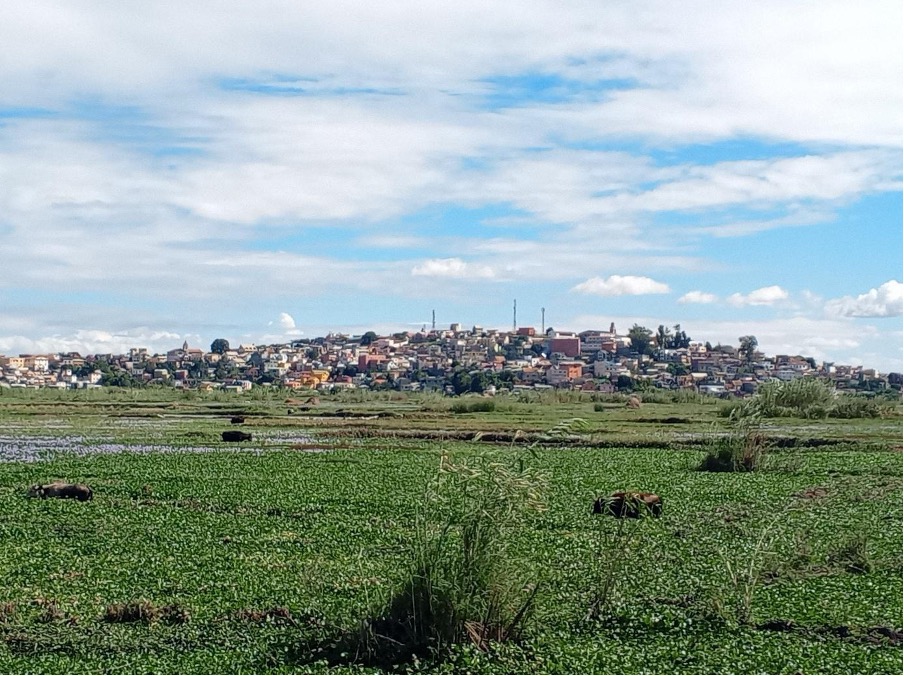
Figure 1. Panoramic view of the Betsimitatara wetland with rice fields and surrounding houses
Understanding the goal: Can wetlands clean our wastewater?
Wetlands are sometimes called “nature’s kidneys” for a reason: they filter, trap, and transform pollutants naturally. They absorb floodwater, improve water quality, and support biodiversity and local livelihoods. Yet in the capital of Madagascar, Antananarivo, where flooding, cyclones, strong winds, pollution in waterways such as the Ikopa River, and growing pressure on peri-urban land are increasing, wetlands are often viewed as wasted space or areas to be filled. However, there is very limited long-term field monitoring showing the extent to which remaining wetlands filter pollutants or reduce flood risks.
PhD student from the African Nature Futures Lab, Dauphin Razafipahatelo, is currently undertaking research to evaluate how effective wetlands are at biofiltration. While some studies in Madagascar have examined wetlands in terms of rice production, biodiversity, or general water quality, few have measured how urban wetlands remove or reduce pollutants from wastewater before the water reaches rivers or groundwater. In particular, there has been no year-round monitoring of how Antananarivo’s rice-field wetlands remove suspended solids, nutrients, and other contaminants under real urban conditions.
This project aims to fill that gap by collecting paired water samples at the entrance and exit of the Betsimitatatra wetland every two weeks to generate rare, site-specific evidence. Data collection began in May 2025 and combines field observations, water-quality analysis, and land-use monitoring.
Betsimitatara, a wetland under pressure
Betsimitatatra is a low-lying wetland within the expanding capital of Antananarivo. Although much of the landscape has been converted into rice fields, the wetland continues to receive wastewater from densely populated neighbourhoods such as Andohatapenaka, Anosibe, and Ankorondrano, making it one of the city’s most disturbed aquatic ecosystems. Ongoing wastewater inflows, unregulated land use, and infrastructure development are progressively altering the wetland’s hydrology, reducing its natural filtration capacity and putting pressure on its ecological functioning.
Despite this degradation, Betsimitatatra remains essential for local livelihoods in surrounding low-income neighbourhoods. It continues to provide ecosystem goods including fish, grass for zebu, ducks, and grazing for livestock. Families rely on the rice fields for seasonal food production, while some residents collect aquatic plants for household use or informal markets. Without clear evidence of the wetland’s current filtering capacity, city planners and decision-makers cannot design effective green-blue infrastructure, protect remaining wetland areas, or manage wastewater in a rapidly urbanising capital.
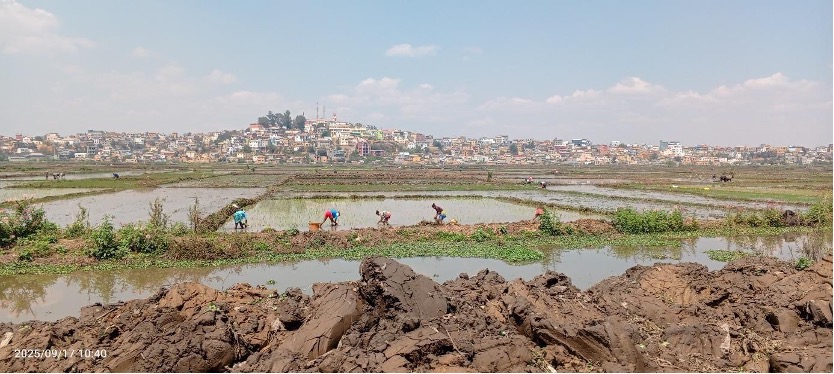
Figure 2. Community members harvesting grass in Betsimitatatra wetland while rice paddies are being maintained during the growing season.
Dauphin’s journey of discovery
Every month, Dauphin collects water samples at both the inlet and outlet of the wetland. In partnership with the Centre National de Recherches sur l’Environnement, samples are analysed in the laboratory for several key water-quality parameters, including suspended solids; nutrients such as nitrogen, phosphorus, potassium, and chloride; organic pollution indicators such as biochemical oxygen demand and chemical oxygen demand; and heavy metals including lead and cadmium.
These parameters help determine how much the wetland reduces pollutants between its entry and exit points. In addition, every two weeks Dauphin measures on-site physical parameters such as temperature, electrical conductivity, pH, and total dissolved solids. These real-time measurements help track short-term changes in water conditions.
Alongside this, he records observations of land use changes around the wetland, including the creation of new rice plots, increased grazing by zebu, and new construction close to drainage channels. These visual records help link human pressures with water-quality trends over time.
The monitoring is also complemented by key informant interviews with wetland users and local communities living around Betsimitatatra. These interviews explore how people use the wetland, their knowledge of seasonal water-quality changes, perceived sources of pollution, land-use pressures, and the challenges they face in maintaining healthy wetland conditions while sustaining their livelihoods. Speaking directly with farmers, herders, grass cutters, fishers, and households provides important insights into the social dimensions shaping wetland functioning.
Fieldwork is not always easy. Sampling often involves navigating muddy paths or working during heavy rains. Since the first field visits in May 2025, Dauphin has already observed seasonal shifts, changes in water clarity, and different human activities shaping the wetland – evidence of a living ecosystem adapting under pressure.
Preliminary results from the first months of monitoring suggest that while the wetland still provides important biofiltration services, such as reducing suspended solids and moderating pH, its capacity is increasingly limited by continuous wastewater inflows, solid-waste accumulation, and intensified land use activities. The people who depend on these wetlands—rice farmers, herders, fishers, and grass collectors—are also key partners in protecting them. Their perspectives highlight the importance of community engagement, and participatory management approaches to balance ecosystem health with livelihood needs.
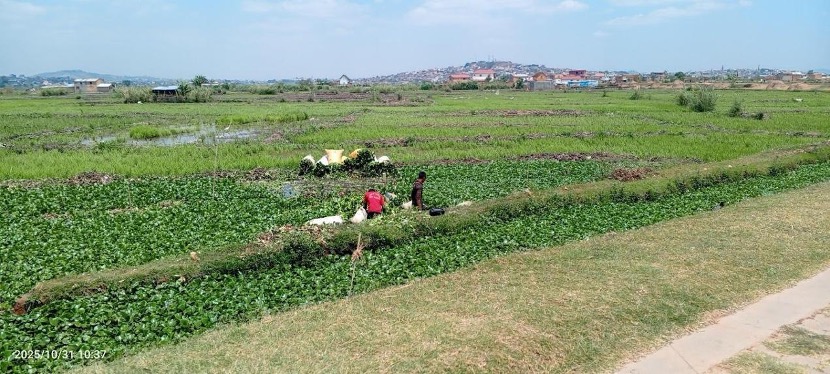
Figure 3. Harvesting hyacinth in the wetland for livelihoods.
Looking ahead
As the one-year monitoring programme continues, the research aims to generate scientific evidence to guide improved wetland management and restoration strategies, and to understand how the wetland’s filtering capacity can be maintained or enhanced through better urban and agricultural planning.
Next steps include completing the remaining months of monitoring, analysing seasonal trends, and integrating interview findings with field observations and spatial data. Together, this evidence will help demonstrate how community practices, land-use dynamics, and water quality interact—and inform more inclusive and sustainable approaches to wetland management in Antananarivo.
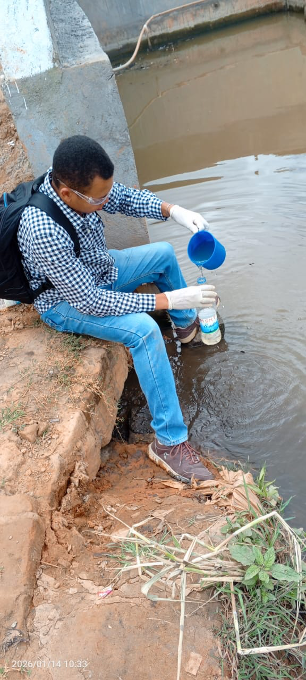
Figure 4. Daulphin taking water samples in the field and measuring pH
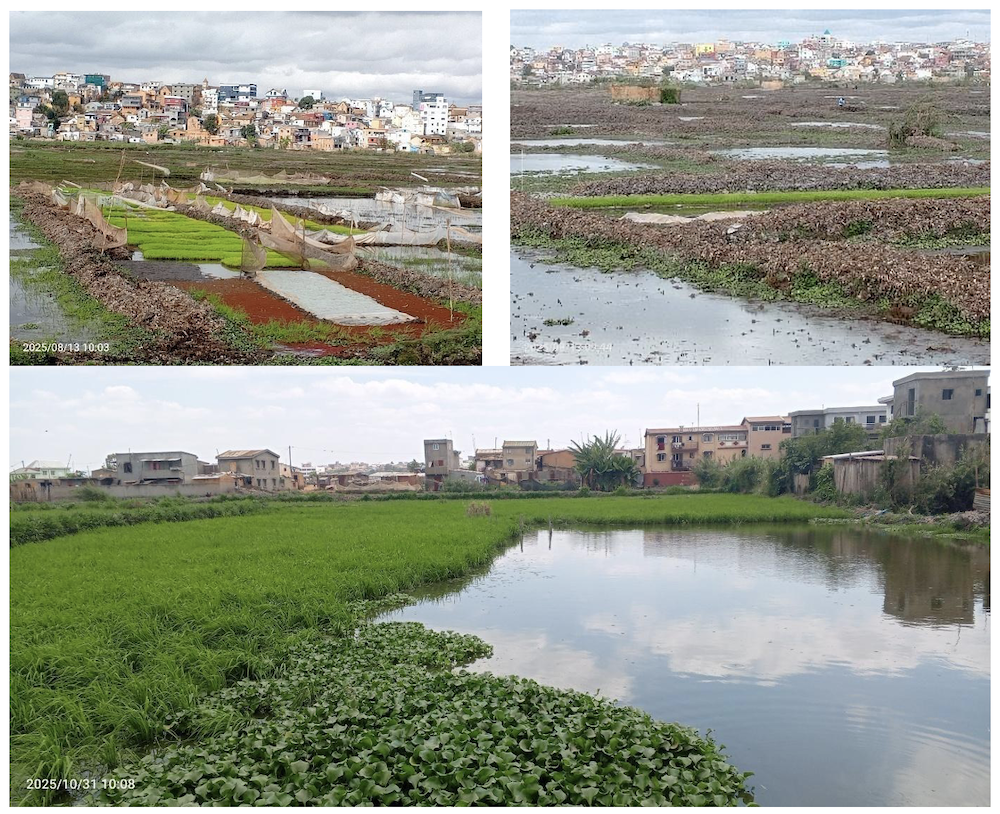
Figure 5. Once a thriving wetland, Betsimitatatra now faces urban pressures from Antananarivo’s growing neighbourhoods, reducing its natural filtration and ecological health
