African Nature Futures Lab

Action research on future making and scaling nature-based solutions for climate resilient infrastructure

African Nature Futures Lab

Priority areas

Nature-based infrastructure

  • We investigate the role of green infrastructure in mitigating extreme weather events such as the urban heat island effect, droughts and flooding.
  • We observe, map and model the role of biodiversity on water biofiltration and air quality.
  • We quantify the impacts of transport infrastructure on ecosystem services and social cohesion and how to future proof coastal infrastructure.
  • We assess the efficacy, livelihood incentives and benefit sharing mechanisms of urban greening and dryland restoration initiatives.
  • We explore transitions between upland mountain and lowland areas.

Food systems sustainability

  • We ask how climate-smart agriculture and agroecological practices can enhance food security and resilience to climate change.
  • We quantify changes in functional diversity, community composition and species distribution in smallholder and urban agricultural landscapes.
  • We assess the impacts of extensification and intensification of farms on ecosystem service provisioning and wellbeing.
  • We conduct farmer exchanges to build adaptive capacity at the farm and landscape level.
  • We assess governance models, evolutions and the water-energy-food nexus.

Climate mobilities & informality

  • We explore incremental and transformative, autonomous and planned adaptation pathways, and how these can be integrated into climate policy.
  • We evaluate the benefits and disbenefits of internal climate migration as an adaptive strategy.
  • We ask questions of environmental justice and access to green space in informal settlements in post-colonial, -apartheid settings.
  • We capture indigenous and traditional ecological knowledge, perceptions of cultural practice and intergenerational knowledge transfer.

Our Vision

We are an interdisciplinary, collaborative lab funded by the European Union and African Union involving environmental geographers, political scientists, climate modellers, ecologists, physicists, geologists and external partners. We aim to imagine alternative futures in response to large-scale land use, climatic and social-ecological transformations in Southern, Eastern, Western and Central Africa.

We collect data, build capacity and create spaces for co-learning. Our action research is impact oriented, problem driven. We apply a pre-emptive forward-looking approach by advancing emerging tools and training practitioners in participatory, spatially explicit methods to envision future scenarios of land use and climate change. We imagine new responses to unprecedented changes.

Our vision emphasises optimisation of conservation outcomes beyond protected area across different sectors and scales. We explore drivers and connections, aiming to understand causality, mapping associations, complex dynamics and interactions between states. We work to understand questions of management and intervention, and consider co-benefits trade-offs, competition between stakeholders, and illuminate governance barriers to implementation.

We seek to enrich academic and policy research through vibrant public engagement. We collaborate with a range of institutions at local and national levels across Africa and the world, including federations of poor, marginalised people living in informal urban settlements and community forest user groups. We work with diverse communities to ensure local needs are reflected in government, private-sector and ministerial efforts. We support open science.

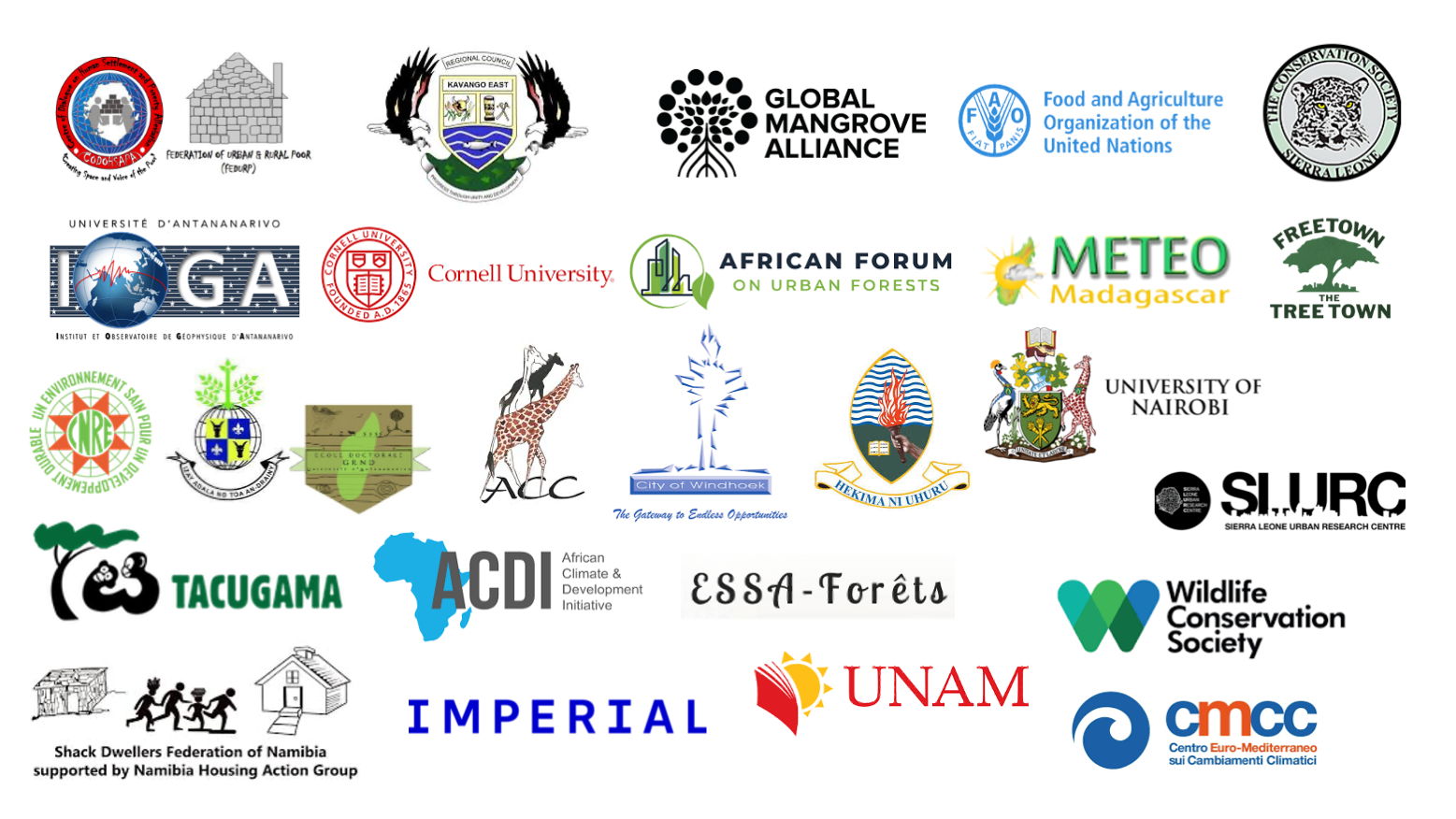
Research partners

African Nature Futures Lab

We integrate methods of

  • Evidence synthesis using systematic reviews

  • Strategic foresight, horizon scanning and future visioning

  • Spatial analysis and land use modelling

  • Quantification of tangible and intangible ecosystem services

  • Field ecological observations

  • Measuring the diversity and abundance of biodiversity

  • Large-scale household surveys

  • Participatory climate risk assessments

  • Working across time – past, present and future

  • Hydrological, NDVI and land surface temperature modelling

  • Transdisciplinary practice

Supporters

Funders