Promoting African narratives free from colonial heritage through Encyclopaedia African Volume IV
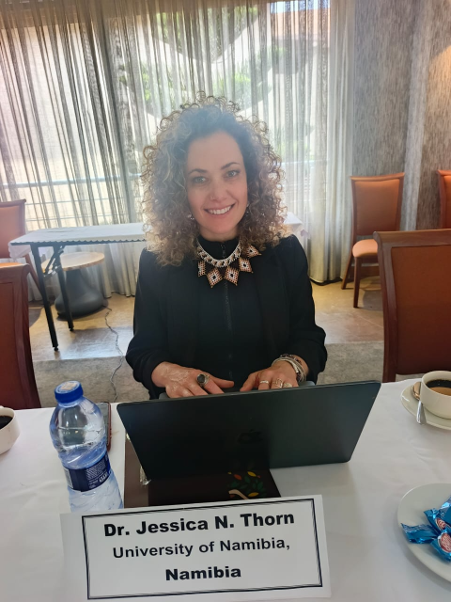
By Dr Jessica Thorn
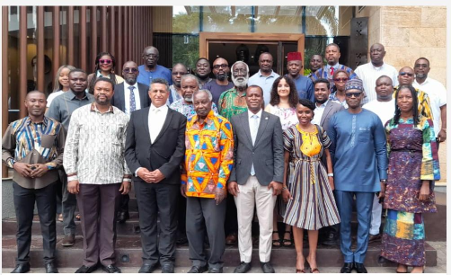
Between the 10-12 June 2026, Dr Jessica Thorn was in Aburi, Ghana, to discuss the future of African scholarship and reflect on how colonial legacies continue to shape not only what knowledge is produced, but whose knowledge is valued, funded, cited, and acted upon. The workshop was hosted by the Encyclopaedia African Programme, African Union and the Government of Ghana. Dr Thorn first arrived in Ghana in 2012 to conduct PhD fieldwork in the Upper West and Upper East. Fourteen years later, this is her 5th project in the country, as an invited author for this Pan Africanist initiative.
Volume IV challenges dominant Western epistemologies by foregrounding knowledge emerging from African intellectual traditions. It seeks to recover, reinterpret, and reintegrate suppressed African knowledge into global narratives, moving beyond externally imposed frameworks to situate practices within their contexts. It is committed to inclusivity, representation and epistemic plurality.
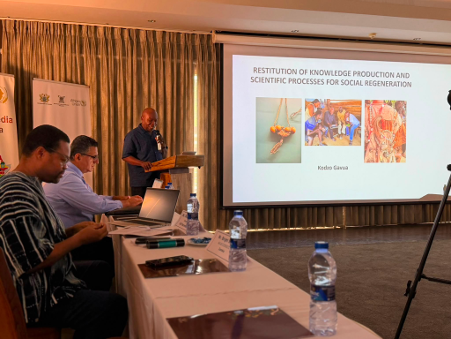
One thought-provoking presentation by Prof Kodzo Gavua challenged us to critically examine how colonialism and enslavement disrupted African systems of knowledge production, consumption and distribution. Pre-colonial Africa was characterised by sophisticated agricultural, mining, manufacturing and trade networks, and diverse forms of knowledge that have often been overlooked or erased in dominant historical narratives. The appropriation of information assembled from Africans into scholarly capital has rarely benefited the communities from which that knowledge originates. Calls were made to rethink academic curricula, engage communities as genuine research partners, value endogenous knowledge systems, and place social justice, cultural diversity, and human dignity at the centre of scholarship.
Another stimulating discussion focused on periodisation and how we understand African history. Participants challenged the conventional pre-colonial/colonial/post-colonial framing, arguing these categories often reproduce Eurocentric understandings of time/history. Instead, we explored alternative circular ways of understanding change, agency and collective political traditions e.g., Sankofa, Ubuntu.
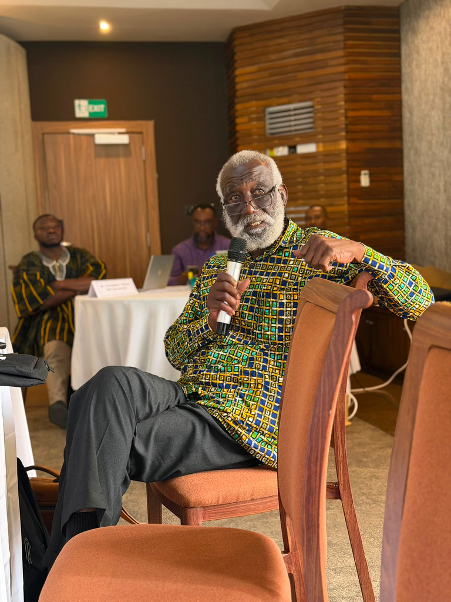
Similarly, Profs Ken Abotsi and Addar-Mensah discussed traditional ecological knowledge, herbal medicine, equitable benefit sharing and biodiversity governance – emphasising the importance of proverb, language, song, poetry, master diviners and healers.
Representing a broad geographic scope, the workshop brought together expertise from environmental sciences, health, history, anthropology, the arts and other fields from across the continent, from institutions such as the University of Ghana, Association of African Universities, African Union, University of Namibia, Centre for Environmental Policy at Imperial College London, London Schoool of Hygiene and Tropical Medicine, the International University of Rabat and the wider African diaspora.
Submit a contribution now! https://encyclopaediaafricana.com/