
Research visits to informal settlements of Orutjandja and Etati in Opuwo: new case study for FLOURISH in Namibia
By: Johannes Andreas and Giesberta Shaanika, PhD students
University of Namibia, Department of Environmental Sciences
September 2024
In April and September 2024, two PhD students from the University of Namibia, Department of Environmental Sciences investigating climate resilience in informal settlements, conducted a scoping trip to Opuwo, the gateway to the Kunene Region in Northern Namibia. They were joined by Tapiwa Maruza, a former MSc graduate of the Africa Nature Futures Lab, and programme officer of the Namibia Housing Action Group.
The research trip involved interviews with residents, informal conversations with local residents, local government officials. Students explored the informal settlements of Orutjandja and Etati together with a local resident and a representative from the SDFN. Field visits were facilitated by Hans Sheefeni, Benedictus Amesho and Fernando Ngobe, who also translated conversations with residents. Further, strategic locations for data collection within the settlement were scoped and students met with potential research assistants.
The town of Opuwo is a place of stark beauty, where the impact of climate change is deeply felt, particularly for residents of Orutjandja and Etati informal settlements. Opuwo is the unique mix of traditional Ovahimba culture and modern influences. The landscape itself is a blend of arid stretches and lush valleys in the shadow of the Kunene River and its tributaries bypassing and dissecting the town, which fill up during the rainy season. Clouds of dust are common, especially during windy days.
Here, with rapid urbanisation and the mushrooming of informal settlements, governance has become increasingly more complex. While the Council of Opuwo oversees Opuwo Town, Orutjandja’s development is also influenced by three traditional authorities due to their expansion onto nearby villages. This overlapping governance structure increases the complexities of decision-making and management of the settlements’ needs. For these reasons, the Orutjandja and Etati informal settlements are currently undergoing gradual upgrades supported by the Namibia Housing Action Group (NHAG) and the Shack Dwellers Federation of Namibia (SDFN).

Children playing in the Outale water pond of the Orutjandja informal settlement, which is a notable feature – serving as a community resource for washing, bathing, and other household needs, although it is not used for drinking and food preparation.
Several minor channels run through the Orutjandja settlement, with houses and other structures built dangerously close to these waterways, making them highly vulnerable to flooding and extending erosional gullies during the rainy season. Household waste is also disposed of in these channels, further exacerbating flood risks and environmental degradation.
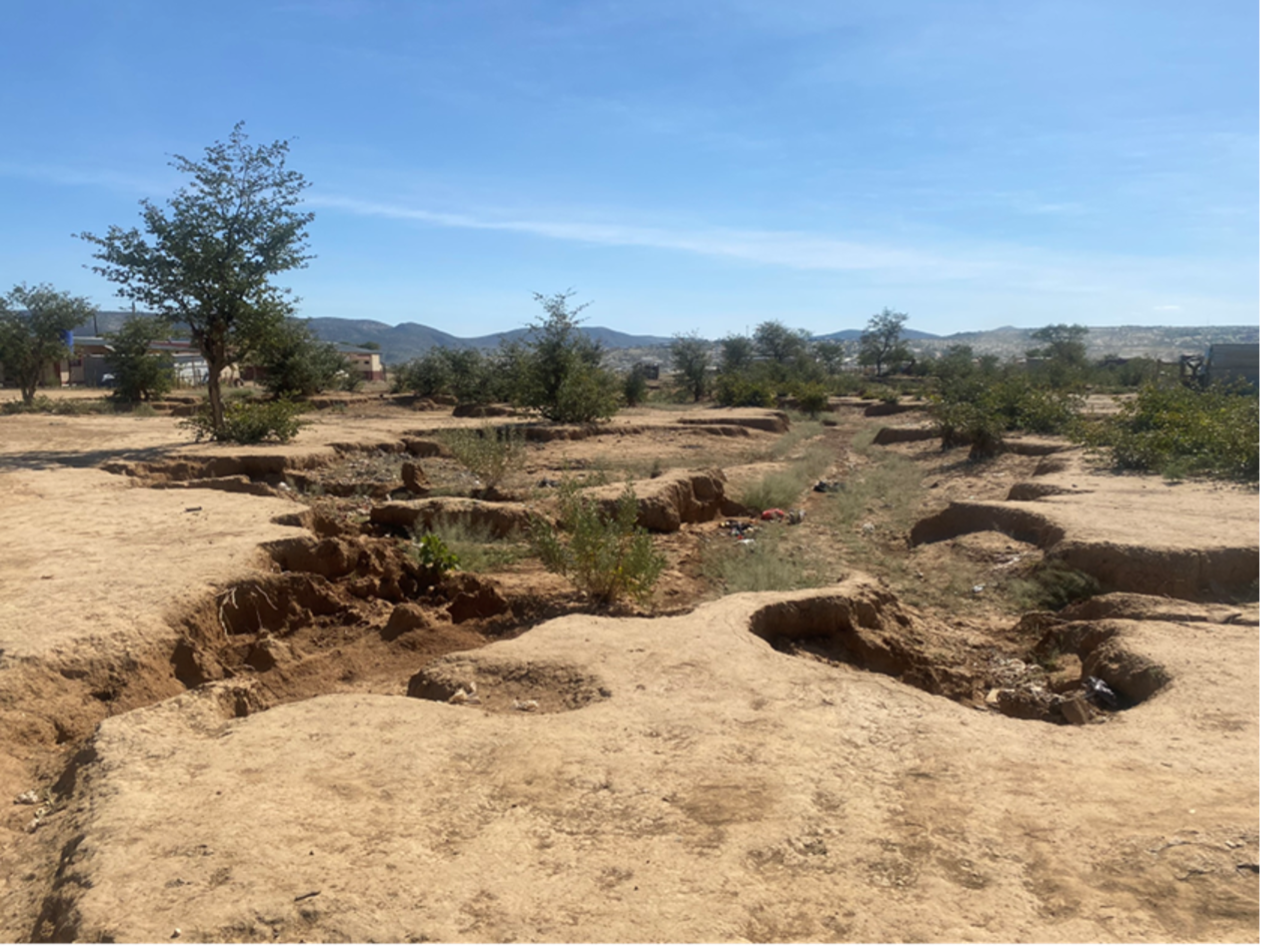
Erosion gullies crosscutting the Orutjandja informal settlement
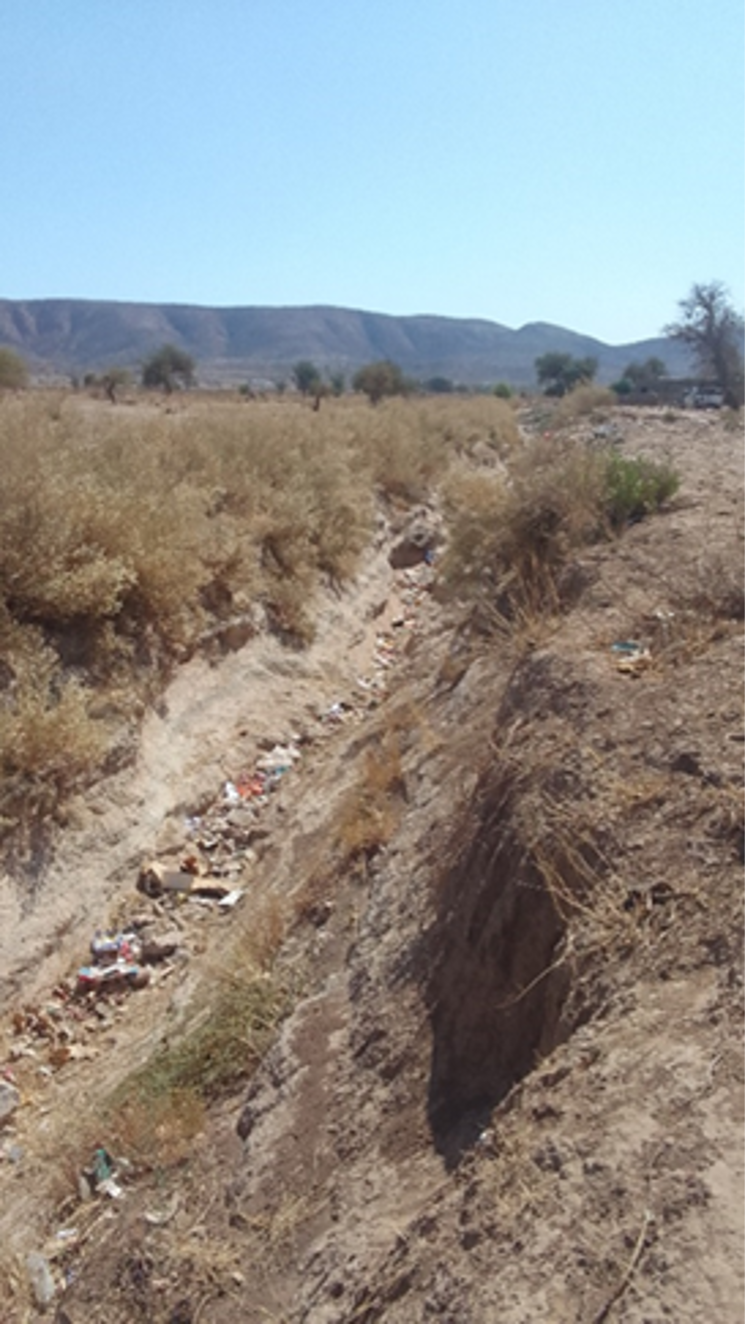
Gully with solid waste in it
Community members create small gardens to cultivate crops, which are protected by fences to deter roaming livestock. Many community members are protecting trees, shrubs, and grasses. This reflects examples of grassroot, community effort using nature-based solutions to address food insecurity and improving overall ecosystem health. The section of Orutjandja settlement that has expanded onto nearby villages and is therefore governed by traditional authorities is surrounded by subsistence farming fields. During the dry season, residents from this section of Orutjandja migrate to the urban centre.
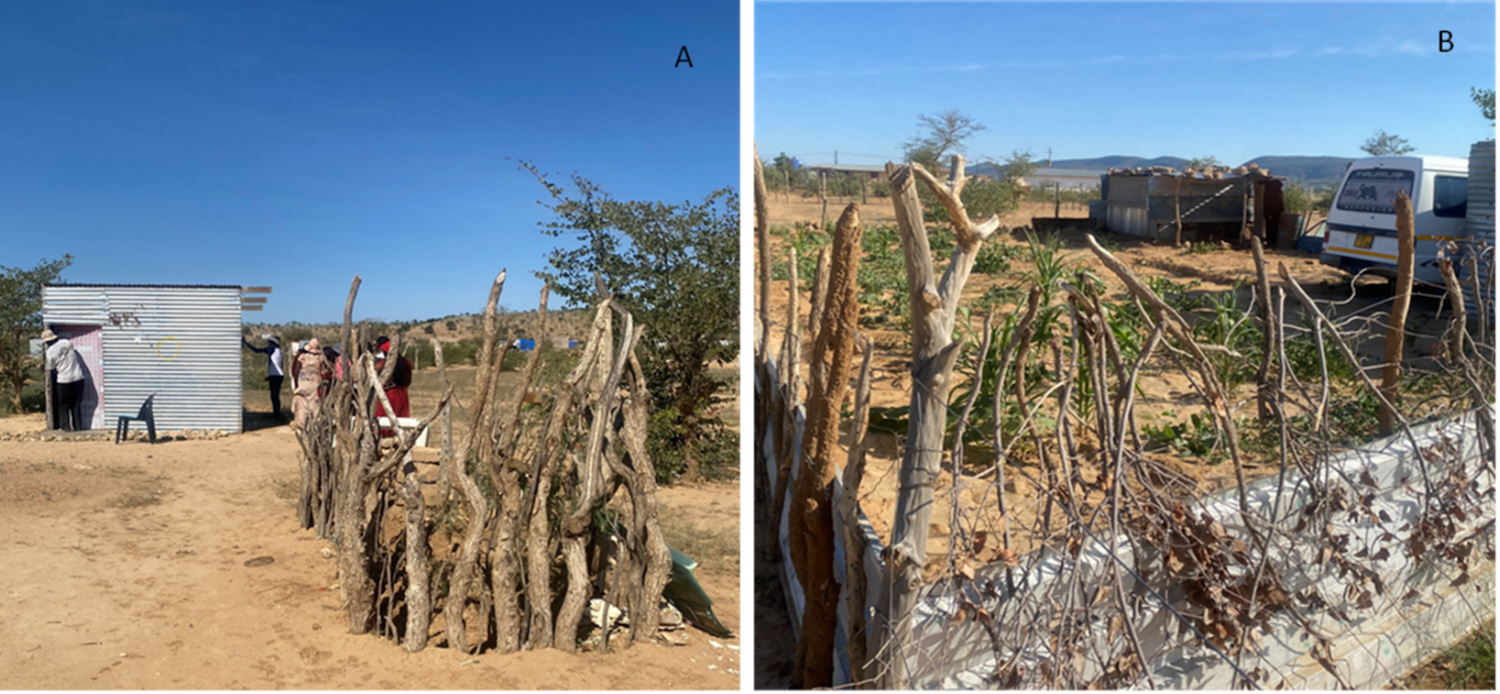
Household gardens fenced off to keep animals out.
However, there was evidence of deforestation, which the locals attributed to the collection of firewood, especially Colophospermum mopane (Omutati), Acacia hebeclada (Omungondo), Terminalia prunoides (Omuhama), Berchemia discolor, Senegalia mellifera, and Ziziphus mucronate. All these tree species contribute to the area’s biodiversity and resilience against soil erosion during the rainy season, as well as providing shade to alleviate heat stress.

One of the waterways passing through the Orutjandja informal settlement dominated by Colophospermum mopane (Omatati) and Terminalia prunoides purple pod trees.

Tree stump cut for firewood
Our scoping trip to Opuwo was eye-opening. Looking ahead, the challenges are significant, but so is the potential for change thanks to the strength of the communities and their deep connection to the land. The Orutjandja informal settlement faces multiple challenges, from flood risks to environmental degradation. However, the community’s resourcefulness, combined with the potential for nature-based solutions, presents opportunities for sustainable solutions. Going forward, our research will focus on how to integrate these solutions to improve climate resilience in informal settlements in Opuwo and across Northern Namibia.
